
Routine Guide
The Right Skin Care Routine Order for Dry Skin
Four steps, done in the right order, matter more than any single product.
Post ID: BP1
Dry skin usually isn't a product problem, it's an order problem. Here's the skin care routine sequence that actually rebuilds a weakened barrier, step by step.
Key Takeaways
Dryness is often caused by a weakened skin barrier rather than a lack of product, meaning the order of your routine matters most. By ditching stripping cleansers, applying hydrators to damp skin, and sealing with ceramide-heavy moisturizers, you can effectively repair your skin's outer layer. Consistency and gentle habits, like avoiding hot water, are key to preventing chronic flaking and tightness.

If you have dry skin, you have probably rubbed a dozen different products on that said, "It'll fix that," and by 3pm you are tight, flaky, and feeling a little irritated. Usually, it's not the product problem. It's the order.
Dry skin is not a simple "needs more moisturizer." It is a compromised skin barrier.
The stratum corneum can't deliver the protection it should and often settles for water retention. No matter how much you apply to a compromised stratum corneum, it will only get worse. Support the skin barrier in the correct order, and each step can do what it's supposed to.
About 50 percent of the lipids in your skin barrier are ceramides. When the ceramide levels decrease (by aggressive cleansers, cold weather, repeatedly exfoliating, or purely genetics), water leaves your skin faster than your skin can retain it.
This leads to dryness, skin tightness, and the stretched-out sensation after cleansing, for example.
A good routine isn't more. It's fewer, done so that it truly rebuilds the barrier and not just undermines it every morning.
1. Cleanse Without Stripping
This is exactly where most dry-skin regimes are going wrong before they've even begun. Read the labels on foaming cleansers and those containing sulfates, and you'll notice they leach the lipids your skin is already deficient in. Opt for a cream or lotion-type cleanser instead of a foam.
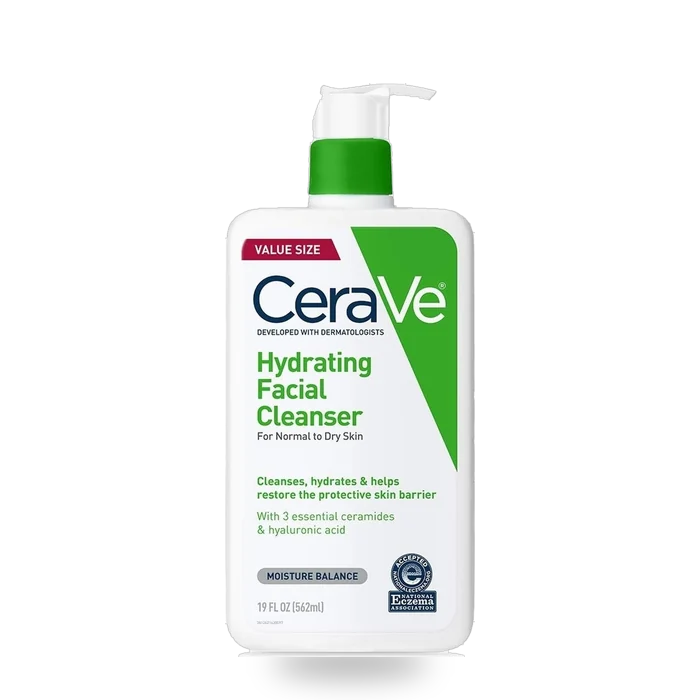
CeraVe Hydrating Cleanser is a popular choice here for a reason — it focuses on three ceramides and hyaluronic acid instead of sulfates, and includes a non-foaming, lotion-y consistency designed for normal-to-dry skin.
It's also unscented with the seal of approval from the National Eczema Association — a good thing if your skin is prone to sensitivity.
Helpful to know: "Dermatologist recommended" statements on packaging are information from the manufacturer, not verified independently by DetroPick. Consider them just a data point.
2. Hydrate While Skin Is Still Damp
If you use a hydrating serum or toner, this is the time to apply (on a damp face). Humectant ingredients such as hyaluronic acid attract moisture, and there are fewer other sources of water for it to absorb when there is a little residual water on your skin.
This step is optional. If you are adding this to a moisturizer that already contains hyaluronic acid, you can get away with not applying the second layer of hydration at all.
3. Seal It In With a Barrier-Repairing Moisturizer
This is where the hydration freezes into place, and dry skin should never skip this step.
You're looking for a moisturizer that contains ceramides, rather than mere water-based hydrators. Ceramides put back what your barrier is lacking, instead of merely padding it temporarily.
CeraVe Moisturizing Cream is simple — a product based on three basic ceramides beyond hyaluronic acid that has a patented delivery system (CeraVe refers to it as MVE Technology) that slowly releases the moisturizing components over time.
It is fragrance-free and non-comedogenic, so can be used on the face and body with minimal risk of breakouts.
Use it liberally. It seems to go on well when applied, though most people (including myself) need to use a lot more when trying to combat dry skin, so don't hold back.
4. Protect With SPF During the Day
What you do 7–10am to help your skin is undone by sun damage. The same barrier that's taken 3 steps to rebuild is gone in a second.
You must include a broad-spectrum SPF 30 or higher in your morning routine if a drier-skin routine is your goal — it is the step that will shield everything else you're doing.
If your moisturizer doesn't contain SPF, apply some separate sunscreen as your final step before applying makeup or stepping outdoors.
Morning vs. Night: What Actually Changes
The core steps stay the same. The differences are small:
Morning: cleanse, hydrate if desired, moisturize, SPF.
Night: cleanse, (possibly opt to) hydrate, moisturize — SPF not needed, and this is when high-hydration, heavy and/or rich formulas seem to feel best, as you're not layering any makeup atop.
If your skin feels really dry in winter, it would be fine to change to a thicker moisturizer at night, while maintaining a lighter one for daytime under makeup.
Mistakes That Quietly Undo a Good Routine
A few habits sabotage even a well-chosen product lineup:
Hot water. Feels good but depletes lipids at a rapid rate, faster than lukewarm water.
Exfoliating too much. Dry skin generally doesn't require as much exfoliation as other skin types. Just once or twice a week is enough.
Not applying moisturizer on "good skin days." Once in a while is fine, but the barrier needs to be supported, not just damaged.
Drying your face by rubbing with a towel. Pat, don't rub, and you'll be surprised how much less irritation you subject your face to.
When a Routine Isn't Enough
If your skin is literally cracking, bleeding, insanely itchy, or just not getting better through a few weeks of a regular routine, then it's beyond what any skincare routine can really heal by itself.
Chronic dryness like that is something your doctor should take a look at, since it could indicate eczema, an ingredient reaction, or something else that needs an entirely different treatment.
Frequently Asked Questions
How long does it take before a new routine really kicks in?
Most people improve their tightness in a week or two.
Significant barrier repair — less flare-ups and better weather resilience — takes about a month, on average.
Do I require a cream in particular for the eyes?
Is it not OK? Usually, if your moisturizer is fragrance-free, and you don't have any ingredient that is too harsh, it can be applied all over your face, including the eye area.
Can I use one moisturizer both for my face and my body?
For dry skin, yes, mostly. A formula based on ceramides such as CeraVe Moisturizing Cream is for both, and that takes a lot of work out.
Is it common that without treatment that your dry skin seems to get worse before it gets better?
A brief transition period is common when switching cleansers, but any kind of flare that continues to get worse is not something to power through — that's a sign you should cut back on the regimen or consult a dermatologist.
Simply, a skin care routine for dry skin doesn't have to be complicated. Four steps, followed thoroughly and in the correct sequence, will outdo an entire shelf of products that aren't necessarily used regularly.
Keep it basic for a few weeks, then go from there.
Frequently Asked Questions
Why is the order of applying skincare products important for dry skin?
Dry skin is often the result of a compromised skin barrier, which struggles to retain water. Applying products in the correct order ensures that you are properly supporting and rebuilding this barrier rather than undermining it.
Should I apply my hydrating serum or toner on dry or wet skin?
You should apply hydrating serums or toners while your skin is still damp. Humectant ingredients like hyaluronic acid attract moisture, and having residual water on your skin provides a source for these ingredients to absorb.
Can I use the same moisturizer on my face and body?
Yes, for dry skin, it is generally acceptable to use the same moisturizer on both your face and body, especially if you are using a ceramide-based formula like CeraVe Moisturizing Cream.
What habits might be sabotaging my dry skin routine?
Common habits that can undo a good routine include using hot water, which depletes lipids; exfoliating too frequently; failing to apply moisturizer on 'good skin days'; and rubbing your face with a towel instead of patting it dry.
Is it okay to use my facial moisturizer around my eyes?
Yes, as long as your moisturizer is fragrance-free and does not contain harsh ingredients, it is generally safe to apply it all over your face, including the eye area.
Was this article helpful?
Thanks for letting us know!