
Explainer
What Actually Treats Dry Skin? A Dry Skin Treatment Guide
What actually helps dry skin, how humectants, emollients, and occlusives work, and how to layer them.
Post ID: BP2
A practical guide to treating dry skin by understanding the skin barrier, choosing the right moisturizing ingredients, and layering them correctly.
Key Takeaways
Effective dry skin care is less about adding moisture and more about repairing a damaged skin barrier using the right combination of humectants, emollients, and occlusives. Understanding these three ingredient categories and applying them in the correct order ensures hydration is actually locked in rather than escaping.

Dry skin treatment sounds simple enough, but search for it and you'll find wall after wall of products all claiming to treat the same problem. Sadly, most of them won't be so helpful in the end, not because they've got bad ingredients in them, but because oftentimes dry skin has nothing to do with a lack of moisture. It's a barrier problem. Knowledge is where you start.
This is made of a blend of proteins, fats, and lipids (ceramides, cholesterol, fatty acids). Sometimes they mention it as bricks and mortar in the skin structure. The skin cells are the bricks.
It is the mixture of lipids between the bricks as mortar. When your mortar pieces break down (harsh cleansers, frozen dry air, too much exfoliation, aging, inherited skin — any of it, you choose), water leaches out of your skin barrier more quickly than it can be replenished.
And you also know the flakes, the tautness, the redness, and altogether the rather discomforting feeling of the skin being just a little too stretched out after washing. Smearing a rich cream on top of it covers it temporarily, but it doesn't do much for the mortar.
The right dry-skin treatment does. Actually, many good products for dry skin function through one or more of three ways. This knowledge helps you to identify the most appropriate treatment by looking at the ingredient label.
Humectants: They Pull Water In
Humectants are substances that will attract moisture from the air and the lower layers of the skin into the surface. The most common humectants are glycerin and hyaluronic acid, which is quite a powerful ingredient: hyaluronic acid alone can attract around 500 times its own weight in moisture.
Incidentally, we might note here that as they are "hygroscopic," they are limited to absorbing moisture from the surrounding environment. In extremely dry conditions (or a low-moisture room), the humectant can, on its own, pull moisture out of the lower layers of skin, and this is one of the reasons they are not widely used as a completely separate product.
Emollients: They Smooth and Soften
Emollients smooth off the rough, flaky feel of the skin and improve the general feel of the skin by filling in the space between the cells. They include shea butter, vegetable oils, vegetable fats, and linoleic acids.
A good emollient can make a rough patch feel softer after the first use.
They are more likely to treat the surface rather than rebuild the barrier and will be combined with an occlusive. Occlusives are used on the surface of the skin, where they form a film barrier to prevent water loss.
Petrolatum, in particular, seems to be very effective at this and is often said to be the most powerful occlusive compound. Dimethicone and beeswax are also occlusive, but just not quite as powerful.
If "sealing it in" just feels a little too greasy, then you are probably discarding an occlusive that would do the trick.
If an occlusive is combined with the right amount of humectant and emollient, then it can be added to the moisturizer to enclose the skin in a resilient, although not greasy, film.
Category: Humectant
What It Does: Pulls water into the skin
Common Ingredients: Hyaluronic acid, glycerin
Best Used: On damp (but not too damp) skin
Category: Emollient
What It Does: Creates softness and smoothness in the texture of the skin
Common Ingredients: Shea butter, fatty acids, plant oils
Best Used: After humectants
Category: Occlusive
What It Does: Seals moisture in
Common Ingredients: Petrolatum, dimethicone, beeswax
Best Used: Last step, mostly at night
Most good basic moisturizers do all three in one, so normally there is no need to have three different products.
This is another reason for the long list of ingredients on dry-skin products, as these will be providing moisture and performing other functions.
As far as the remaining three types are concerned, ceramides must be considered separately because they are a component of the skin.
As lipids that naturally make up approximately fifty percent of the barrier, ceramides will be present in a cream. CeraVe Moisturizing Cream must be the simplest example I have discussed so far.
It uses three core ceramides and hyaluronic acid, along with a delivery system (CeraVe calls it MVE Technology) that allows the moisturizing ingredients to be released gradually rather than all at once. It is fragrance-free and non-comedogenic.
Fragrance is one of the most common irritants of compromised, reactive skin.
Applying a very rich emollient cream is hopefully an initial solution, although not a dramatic one, but I think that the benefit will come from the product supporting the barrier and taking time for this to work. Because of this, consistency over several weeks is important.
How to Layer These Ingredients Correctly
Yes, you have the correct ingredients, but it's no use if you're not layering them correctly.
Overall broad guidelines are consistent with the theory of what each category actually does: use a mild cleanser and, if possible, a cream- or lotion-formulated rather than foam-formulated cleanser.
Apply a humectant once the skin has been dampened. Then follow it with an emollient or a moisturizer if it contains ceramides, to smooth the surface again and begin to refill the barrier.
Add a seal with an occlusive if your skin is predominantly dry on its own, or put one in your cream. Going from lightest to heaviest is critical because an earlier heavy occlusive can block everything else from absorbing.
It's one of the most common "nothing's working" sensations — it's in the order, not in what you're putting on.
Alterations in "Climate": Does It Constitute a Form of "Treatment"?
Somewhat, yes.
Humid weather sometimes makes even lighter, humectant-heavy formulas pass without a hitch, since the atmosphere isn't pulling the moisture away quite as gleefully. This can be a problem in the dry, cold winter months, when we might go for something seriously occlusive before going all nine yards.
And another thing that people do not take enough advantage of is indoor heating. It removes lots of moisture from the atmosphere.
This is yet another factor contributing to why winter's dry skin can look so dreadful — even to those who may not consider themselves "dry skinned" at all in summer.
What to Avoid While Treating Dry Skin
Here are a few habits which work against dry skin treatment:
Foaming or sulfate-making cleansers. These will strip away the very lipids you are trying to restore.
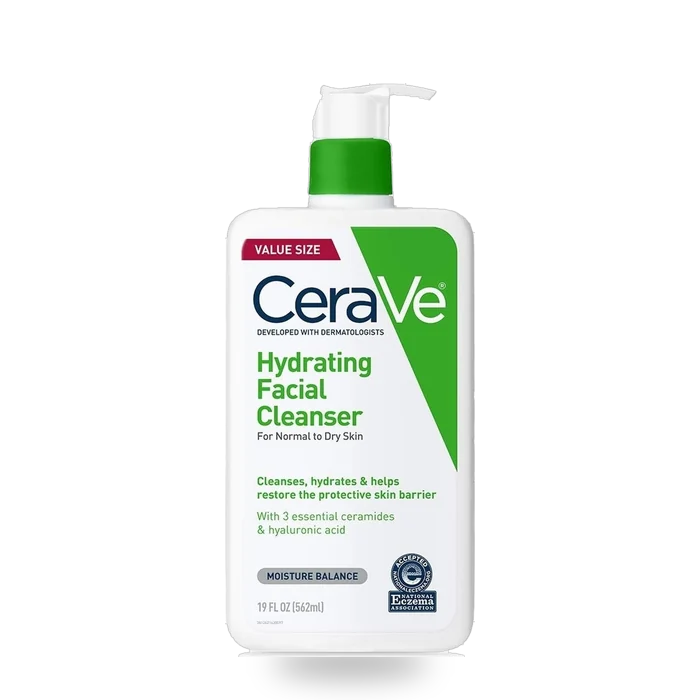
A cream or lotion-like cleanser like CeraVe Hydrating Cleanser, which is a non-foaming, ceramide- and hyaluronic-acid-based rather than sulfate-making product, is a more appropriate beginning for compromised skin.
Hot water. It feels nice but increases evaporation.
Too much exfoliation. Not only is dry, aging skin incapable of benefiting from more exfoliation, it doesn't need it either!
Not putting moisturizer on "good skin days." This is a constant need for barrier repair, not a 911 after flare-ups.
But if you want a step-by-step set of instructions for everyday use of this process, note how the day-to-day instructions of the DetroPick group for establishing a skin care regimen for dry skin walk you through the proper order of application in great detail.
This is where promises have been broken — a couple of days later, after correcting at that level, much less tightness has been perceived by a number of you, with a state of immediate improvement; this is owing to hydrophobic and emollient properties.
A natural barrier correction should result in fewer breakouts and less weather sensitivity and should help strengthen the skin over the coming months, but it usually takes at least 6 weeks of treatment or use to achieve this.
If an "all-night solution" comes with it, then all it's doing is treating the symptoms and not the actual problem. Just the same, if you've been using a product for a few weeks with no effect, then it isn't suitable for long-term dryness and isn't worth wasting your money on.
If the dryness is cracking, bleeding, or anyone has some savagely itchy patches and the dryness is still present, it's possible that people could be allergic to something, or possibly that it is atopic dermatitis, and so I would suggest going to the dermatologist now instead of trying further products.
Is this really an ingredient you can basically slather on your skin without a second thought? Yes!
Frequently Asked Questions
Humectants and Occlusives: Can they be used together?
Using a humectant like hyaluronic acid first and an occlusive on top to lock in moisture should be an effective way to layer both kinds of products together.
Why am I feeling that my skin has dry patches after changing to a "natural" moisturizer?
A product that is called "natural" doesn't automatically mean that it suits your skin type. In many cases, natural moisturizers do not contain the necessary ceramides and/or occlusives that are needed by your skin for it to retain enough moisture, so that it doesn't dry out and leave you disappointed as your skin ends up getting even drier.
Are there different treatments needed for face and body?
Generally, the good ceramide products (such as CeraVe Moisturizing Cream) that you find on the market have face and body versions, so you can easily care for the dry patches on your body without any worries about facial irritation.
Your skin may need more than what is obvious to be properly treated for dryness, but the main points should be to choose products that first are helpful in general and second, contribute towards the strengthening of your skin barrier. Using products with humectants, emollients, and occlusives combined is much more likely to do a better job in deeply hydrating the skin than relying solely on the miracle product that may promise to get your skin right overnight.
Frequently Asked Questions
Why does my moisturizer seem to only provide temporary relief for my dry skin?
Dry skin is often a barrier problem, not just a lack of moisture. If your skin's 'mortar'—the lipid mixture between your skin cells—is broken down, simply smearing a cream on top only covers the issue temporarily. To effectively treat dry skin, you need ingredients that rebuild the barrier rather than just masking the flakiness.
What is the difference between humectants, emollients, and occlusives?
These three categories of ingredients function in different ways: humectants (like hyaluronic acid and glycerin) attract moisture from the environment into the skin. Emollients (like shea butter or plant oils) fill in the spaces between cells to improve smoothness and texture. Occlusives (like petrolatum) form a film barrier on the skin's surface to seal in moisture and prevent water loss.
What is the correct order to apply my dry skin products?
You should always apply products from lightest to heaviest. Start with a mild, non-foaming cleanser, and apply a humectant while the skin is still damp. Follow this with an emollient or a moisturizer containing ceramides to smooth the surface and replenish the barrier. If your skin is very dry, finish with an occlusive to seal everything in.
What habits should I avoid if I am treating dry skin?
You should avoid foaming or sulfate-based cleansers, as these strip away the lipids your skin needs. You should also avoid washing with hot water, which increases evaporation, and avoid excessive exfoliation. Additionally, do not stop moisturizing on 'good skin days,' as your skin requires consistent barrier repair.
Was this article helpful?
Thanks for letting us know!