
Explainer
What Does "Dermatologist Recommended" Actually Mean?
It's not FDA-approved, it's not audited, and it's not lying to you — but it's also not saying as much as you think.
Post ID: BP3
"Dermatologist recommended" isn't FDA-regulated or certified. Here's what the claim actually means, how CeraVe uses it, and how to weigh it when shopping.
Key Takeaways
The phrase "dermatologist recommended" is largely unregulated and usually stems from brand-commissioned surveys rather than official clinical testing. While these labels often signal safer formulations with fewer irritants, shoppers should rely on ingredient lists rather than marketing claims to find what works best for their individual skin.

You've read it on the bottle a hundred times. "Recommended by dermatologists." It's sitting right there on the front label, next to the SPF number or the ceramide call-out, quietly trying to do a lot of convincing.
But hardly anyone ever wonders exactly what it's giving its approval to because the real answer is: less than most consumers imagine. This is not a statement about whether the phrase is honestly telling us the truth or not.
It's more useful than that. It's about seeing what exactly the words are and are not promising so that you can evaluate the claim the same way you would evaluate any other bit of marketing, with some context, neither blindly trusting it nor blindly dismissing it.
And here's what most Americans are shocked to learn: the phrase "dermatologist recommended" is an unregulated, uncertified marketing claim in the US.
The FDA does regulate certain aspects of cosmetic labeling, like ingredient disclosures and the use of certain drug claims, but it does not monitor or evaluate marketing language of the sort that might say a product "cures" or "treats" a disease.
And so that leaves brands with plenty of scope to define the phrase as it suits. And most of them follow one of a few tried and tested paths.
By three words on a label, many disparate things get compressed, and simultaneously the words rather than the ideas are what actually smother the differences between them.
Dermatologist surveys. A brand-sponsored market research company sent a questionnaire to a group of practicing dermatologists. Usually you see a question like "which brand do you recommend most often to dry skin sufferers?" If a brand tops the survey, it can use that achievement in its marketing. It's good data but still brand-specific and self-commissioned, not independent analysis from a third-party lab on the product you're holding.
Developed with dermatologists. Some products include dermatologists in the formulation stage, either having dermatologists approve the ingredients selected and the amounts used or having dermatologists assist in designing a product for specific skin issues. This is a distinctly different claim than "recommended," though they are easily confused in marketing language.
Individual endorsement. A figure is in the public eye saying, sometimes for money, sometimes not, that they like a product. This is the weakest form of the claim, as this enthusiasm is not in itself a clinical finding.
Interestingly, each of these three routes collapses onto the identical front-of-bottle phrase, which is precisely what makes the claim taxonomically questionable rather than uncontroversial.
This would be an overcorrection; it is not quite all marketing spiel. At the very least, the amount of dermatologist involvement (even at the survey level) generally does correspond to a few pragmatic factors: fewer known irritants, more conservative fragrance and agents formulated around popular, well-studied and not trendy untried actives. This much is true.
What it doesn't tell you is if the product is appropriate for your skin, to be exact.
Dermatologists recommend products based on general patterns seen in large groups of people — dry skin, sensitive skin, adult-onset acne-prone skin — not based on understanding your particular skin barrier, your climate, or all the products you already have in your routine.
A product can be a true dermatologist favorite in a broad sense and still be a bad fit for your own skin.
"Dermatologist Recommended" vs. "Dermatologist Tested" vs. "Clinically Proven"
Skincare labels capitalize on a handful of phrases that sound alike, and it's better to tease them apart, because they don't mean the same thing just like marketing copy makes them seem.
Dermatologist recommended — usually survey-based or brand level, not a claim about one product's clinical performance.
Dermatologist tested — generally indicates that a dermatologist tested the product for skin reactions/tolerability (pretty much a safety indication). Presented by the cosmetic manufacturer as a safety indication, not an effectiveness indication. Doesn't imply they'll be effective for your intended goal.
Clinically proven — of the three, this is the strongest-sounding phrase, but also the most vague without more context. It should lead to one specific study that is described, with sample size, what was tested, and over what period of time. If a brand makes this claim without any of that detail available, it is acceptable to treat it the same way as an undocumented "recommended" claim with somewhat more clinical wording.
Editor's note: none of these three claims are deceitful by nature — it's not that brands are lying. It's that shoppers potentially translate more into them than the phrase actually says. It just needed a decoder.
A Real Example: How CeraVe Uses the Claim
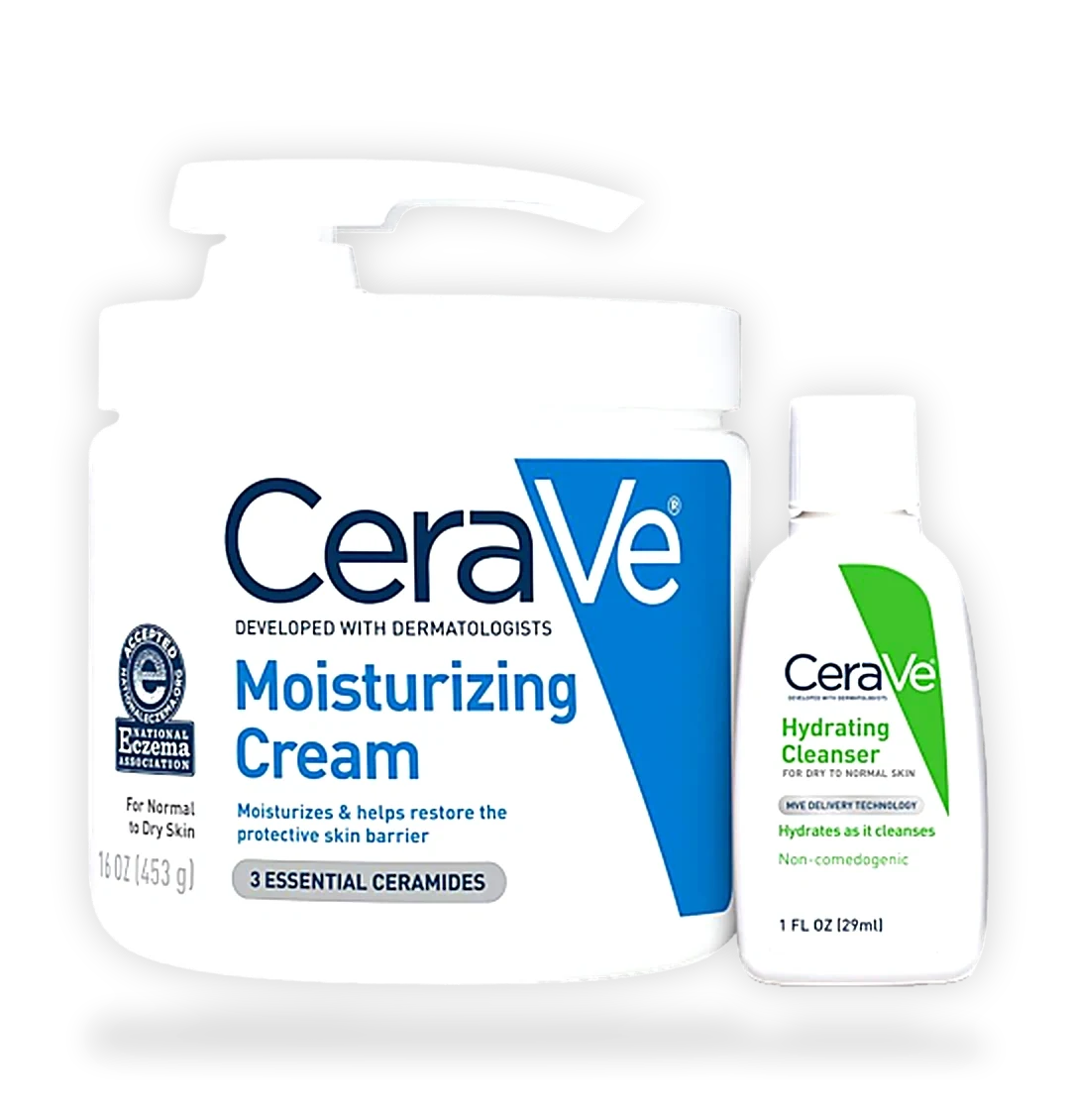
CeraVe is somewhat the face of this positioning, claiming to be the "#1 Dermatologist Recommended Skincare Brand." Hold on — that's a manufacturer claim, not verified by DetroPick against its survey data. Both are okay to use as useful contextual statements, but not equivalently rigorous evidence. Even more compelling in practice, though, is examining the actual formulation rather than relying on the marketing phrase alone.
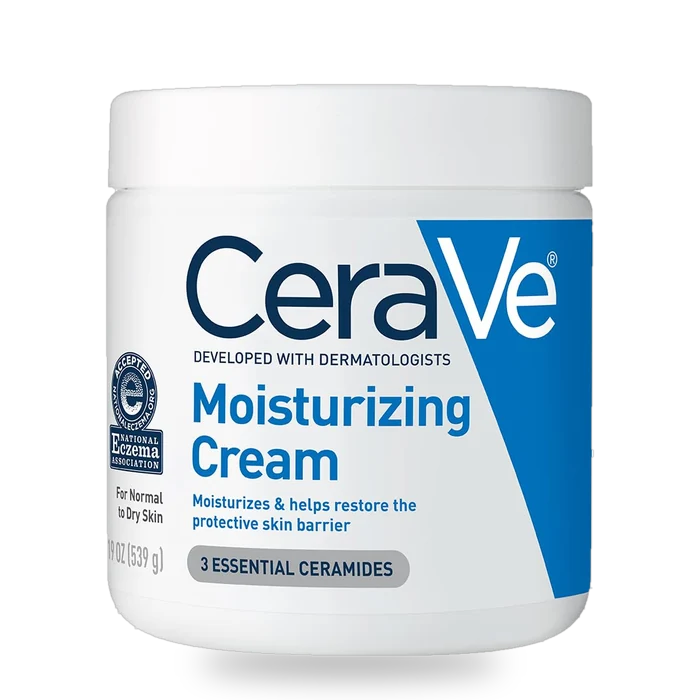
In our CeraVe Moisturizing Cream review, the formula's case on its own holds up to the marketing phrase: three ceramides comprising a significant proportion of the skin barrier's natural lipids, an unscented formulation, and a National Eczema Association seal — details that support the broad positioning with something more tangible than a survey result.
We see similar issues in CeraVe's Hydrating Cleanser: the phrase "dermatologist recommended" combines with a truly gentle, low-irritant product invented as a logical opening move in routine skin care (something worth learning about without the label's input).
That is the valuable second-order reframing: framing the question as whether a gentle, non-stripping opening move in routine skin care is ever "worth" having, regardless of whether it is "dermatologist recommended" or not. Combined, both CeraVe products provide the best model for how to approach a claim like this: an initial suggestion on formulation ethos (modest, low-irritant, generally tolerable) that you have to verify by looking at the actual ingredients list and comprehensive analysis, not a conclusion unto itself.
How to Actually Use This Claim When You're Shopping
Instead of stopping at "dermatologist recommended" as a yes/no signal, we can use it as a prompt to ask some questions.
Is the claim placed at brand level or at product level? "CeraVe is dermatologist recommended" is a weaker claim than "this specific moisturizer was tested and recommended by dermatologists."
Does the ingredient listing support it? Find a few things: a non-irritating profile, a little bit of fragrance, well-studied actives, no long list of unneeded extras, rather than just the phrase.
Is it addressing your true concern? A dermatologist-recommended cream for dry skin may not be the best choice for acne-prone, hyperpigmented skin. The claim does not mention for which audience unless specified in surrounding marketing.
Would you purchase it without the phrase? If the rest of the copy, pricing, and testimonials are enough on their own, the claim is a bonus. If the phrase is doing all the work, that's something to remember.
Frequently Asked Questions
Is "dermatologist recommended" approved or regulated by the FDA?
No. This is a common misconception — the FDA does not approve cosmetic products the way it approves drugs, and a product can carry a "dermatologist recommended" claim without ever being reviewed by the agency.
What's the difference between "dermatologist recommended," "dermatologist tested," and "clinically proven"?
"Dermatologist recommended" is usually based on a survey or is a brand-level claim rather than a claim about a specific product's performance. "Dermatologist tested" generally just means a dermatologist checked the product for skin reactions or tolerability — a safety claim, not an effectiveness one. "Clinically proven" sounds the strongest but should point to a specific, described study; without that detail, it's about as vague as an undocumented "recommended" claim.
Does the claim apply to the whole brand or to one specific product?
It can be either, and the label rarely says which. A brand-level claim like "CeraVe is dermatologist recommended" is weaker than a product-specific claim that a particular formula was tested and recommended by dermatologists.
Should I ignore the "dermatologist recommended" label completely?
Not necessarily. The claim is a genuine, if soft, signal — dermatologist-commissioned surveys and formulation input do tend to correlate with lower-irritant, more conservative formulas. It shouldn't be the only thing you check, though; treat it as one data point alongside the ingredient list, price, and whether the product actually addresses your skin concern.
How does CeraVe use the "dermatologist recommended" claim?
CeraVe markets itself as the "#1 Dermatologist Recommended Skincare Brand," which is a manufacturer claim rather than independently verified data. Looking at the actual formulas — like the ceramides and fragrance-free profile in its Moisturizing Cream and Hydrating Cleanser — gives more concrete support for the positioning than the marketing phrase alone.
The Bottom Line
"Recommended by a dermatologist" may be a genuine message, though it's an unregulated one — essentially a trust-building phrase rather than a certification. In general, products that make this claim have slightly lower-irritating formulas, which is a genuine feature, but checking the contents of the bottle still remains the best way to verify its suitability for you, and its compatibility never has the last word over any dermatologist.
As usual, the best way to go is a simple one: find and read the list of ingredients, figure out if the brand's statement is referring to the whole collection or the single item, all the while thinking it over about other factors, namely the price, the formulation, and whether they actually meet your particular skin needs.
Frequently Asked Questions
What does the label 'dermatologist recommended' actually mean in the United States?
The phrase 'dermatologist recommended' is an unregulated, uncertified marketing claim in the US. Because it is not monitored or evaluated by the FDA, brands have the freedom to define it themselves. It is typically based on methods like brand-sponsored surveys, products developed with dermatologist input, or individual endorsements.
Is 'dermatologist recommended' the same thing as 'dermatologist tested'?
No. 'Dermatologist recommended' is usually based on surveys or brand-level marketing, whereas 'dermatologist tested' generally indicates that a dermatologist has evaluated the product for skin reactions or tolerability, serving as a safety indication rather than an effectiveness claim.
If a product is recommended by dermatologists, does that guarantee it will work for my skin?
Not necessarily. Dermatologists typically recommend products based on general patterns seen in large groups of people (like dry or sensitive skin) rather than an individual's specific skin barrier, climate, or existing routine. A product can be broadly favored by dermatologists while still being a bad fit for your particular skin.
How can I evaluate a product if I shouldn't rely solely on the 'dermatologist recommended' claim?
Instead of treating the claim as a final decision, use it as a starting point to look deeper. Check if the claim is made at the brand level or for the specific product, and examine the actual ingredient list to look for a non-irritating profile, conservative use of fragrance, and well-studied active ingredients.
Was this article helpful?
Thanks for letting us know!