CeraVe
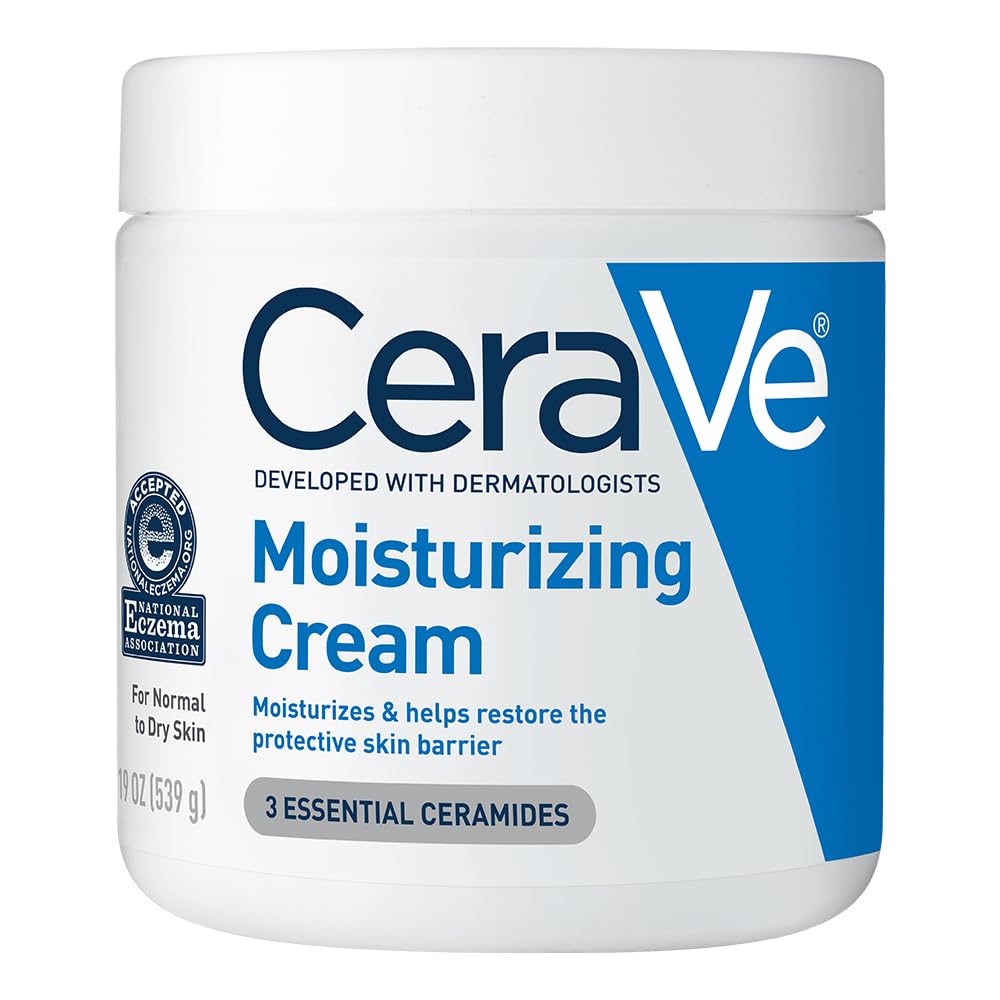
CeraVe Moisturizing Cream, Face Moisturizer & Body Cream with Hyaluronic Acid and Ceramides, 19 oz
Dermatologists helped develop this fragrance-free, ceramide-based cream, which also carries the National Eczema Association's Seal of Acceptance.
Quick Verdict
Best For
People with dry, sensitive, or eczema-prone skin looking for a dermatologist recommended, barrier-repairing moisturizer for face, body, or hands; anyone who wants a fragrance-free, allergy-tested formula backed by the National Eczema Association's Seal of Acceptance.
DetroPick Review
CeraVe Moisturizing Cream is one of those products that shows up on almost every "dermatologist recommended moisturizer" list you'll find, and unlike a lot of products that get that label loosely applied to them, this one actually earns it. It was developed with dermatologists from the start, it carries the National Eczema Association's Seal of Acceptance, and it's sitting at 4.7 stars across more than 146,000 ratings on Amazon — a volume of feedback that's genuinely hard to find anywhere else in the moisturizer category. So the question isn't really "does this work," it's "does it work for you," and that's what we dug into.
At its core, this is a fragrance-free, ceramide-based cream built around three ingredients doing most of the heavy lifting: ceramides, hyaluronic acid, and CeraVe's patented MVE (MultiVesicular Emulsion) delivery technology. None of those are marketing buzzwords — they're specific, well-understood ingredients with a real job to do, and understanding what each one actually does is the best way to figure out whether this cream fits your skin.
Ceramides are the part of this formula that matters most. Ceramides are lipids that occur naturally in skin, and they make up roughly half the lipids in your skin's outer barrier — the layer that keeps moisture in and irritants out. When that barrier is compromised, whether from harsh weather, over-exfoliation, eczema, or just naturally dry skin, ceramide levels drop and skin has a harder time holding onto hydration. This cream uses three specific ceramides (Ceramides 1, 3, and 6-II), which is the same combination CeraVe uses across its core lineup, and it's the reason this product gets recommended so often for eczema-prone or barrier-compromised skin rather than just "dry" skin generally. That distinction matters: a lot of moisturizers hydrate temporarily, but fewer are actually formulated to help repair the barrier that's supposed to hold that hydration in over time.
That's really what separates a genuine dry skin treatment from a product that just feels hydrating in the moment — one addresses the mechanism causing the dryness, the other only masks it until it wears off.
Hyaluronic acid is the second piece, and its job is different from the ceramides. Where ceramides work on the barrier itself, hyaluronic acid is a humectant — it attracts and holds water at the skin's surface, which is what gives this cream its immediate plumping, hydrating feel. The two ingredients are complementary rather than redundant: one draws moisture in, the other helps keep it from escaping.
Then there's MVE technology, which is arguably the most differentiating piece of the formula and the part most competitors can't easily copy, since it's patented. Instead of releasing all of its moisturizing ingredients at once on application, MVE is designed as a multi-vesicular emulsion that releases ceramides and other actives gradually, which is where the "24-hour hydration" claim comes from. In practice, this is why CeraVe products are frequently recommended for once- or twice-daily use rather than needing constant reapplication throughout the day — the delivery system is doing sustained-release work in the background rather than sitting entirely on the skin's surface.
Texture-wise, this is a genuinely rich, thick cream — closer to a balm than a lotion — which tracks with its "whole body" positioning on the label. It's rated for use on both face and body, and CeraVe even markets it as usable as a hand cream for particularly dry, cracked skin. That versatility is a real strength if you're looking for one product to cover multiple needs, but it's also worth being upfront about: a cream this rich isn't going to feel like a lightweight daily face lotion, and if you have oily or acne-prone skin, you may find it heavier than what you're used to, even though it's labeled non-comedogenic and shouldn't clog pores for most users.
Good to know: "Non-comedogenic" means a product is formulated not to clog pores, but that's a formulation intent, not a guarantee — individual skin can still react differently, so if you're acne-prone and cautious, it's worth patch-testing on a small area first.
One of the more meaningful trust signals here is the National Eczema Association's Seal of Acceptance, which isn't handed out casually — it requires the NEA to review a product's formulation against criteria meant to support people with eczema and sensitive, reactive skin. Combined with the fact that it's fragrance-free, paraben-free, and allergy-tested, this formula is clearly built with sensitive and compromised skin in mind first, and "nice-to-have hydration" second. If you don't have eczema or particularly reactive skin, that doesn't make it a worse option — it just means you're getting a formula with a higher bar for gentleness than a typical drugstore moisturizer, which is rarely a downside.
It's also worth calling out what's not in this formula, since it matters for certain skin types. There's no SPF here, so this isn't a one-step morning moisturizer-and-sunscreen combo — you'll need a separate sunscreen if you're using this during the day. The ingredient list also includes petrolatum and dimethicone, both of which are common, well-tolerated occlusive ingredients that help seal in moisture, but they're ingredients some people specifically try to avoid for personal or skin-type reasons, so it's worth checking the full ingredient list if you're following a particular routine philosophy.
Where this gets a little more complicated is sizing and pricing, and it's worth walking through, because the per-ounce math isn't as straightforward as it looks at first glance. The 19-ounce jar is priced at $15.99 (marked down from $17.99), which works out to about $1.00 per ounce — a strong value for a ceramide-based moisturizer at this quality tier. But CeraVe also sells this in an 8-ounce size starting around $13.52 and a 16-ounce refill option, and depending on which size and listing you land on, the per-ounce cost can shift meaningfully. If you're buying for the first time, the 19-ounce size is the better per-ounce value and a reasonable amount to commit to, since a rich cream like this tends to last a long time per application. If you're just testing whether your skin likes it, the smaller size is the lower-risk way to find out.
Because it's such a widely available, well-documented product, there's also a fair amount of consistency in how it's discussed across dermatology and skincare circles — it's frequently brought up as a starting point for people who've recently developed dry or reactive skin, are looking for a dermatologist recommended moisturizer without a prestige price tag, or are managing a diagnosed condition like eczema and need a barrier-focused option their dermatologist is likely to already be familiar with. That familiarity matters more than it might seem: if you ever need to discuss your skincare routine with a dermatologist,
I'm using CeraVe Moisturizing Cream
is a sentence most dermatologists can immediately picture and give informed advice around, since it's one of the most commonly recommended options in the category.
Application itself is simple — the label calls for applying liberally, as often as needed, avoiding direct contact with the eyes — and there's no complicated routine or waiting period required, which is part of why it works equally well as a daily face cream, a body moisturizer, or an as-needed hand cream for particularly dry patches. That flexibility is genuinely useful if you'd rather standardize on one trusted moisturizer across your whole routine instead of buying separate products for face, body, and hands.
It's also worth mentioning the sustainability certifications attached to this listing, since they're not something every moisturizer in this price range can claim. The product carries Cradle to Cradle Certified recognition across three separate categories — safer chemicals, manufacturing practices, and worker well-being — plus a Climate Pledge Friendly designation. These aren't marketing badges CeraVe assigns itself; Cradle to Cradle is a third-party certification body that evaluates products against defined criteria in each category. For shoppers who factor manufacturing practices and ingredient safety into a purchase decision, that's a meaningful data point layered on top of the skincare performance itself.
One thing worth being realistic about: a cream this rich and occlusive isn't going to suit every climate or every season equally. In hot, humid conditions, a formula built to seal in moisture for 24 hours can feel like more than your skin needs, and some users prefer switching to a lighter lotion during summer months and reserving this cream for colder, drier weather or specifically dry patches like elbows, knees, and hands. That's not a flaw in the formula — it's simply the tradeoff that comes with a cream built for maximum barrier support rather than a lightweight, all-season lotion. If your skin runs dry year-round, or you're managing eczema that doesn't take a seasonal break, that tradeoff is much less of a concern.
The jar-versus-pump question also comes up often with this product, and it's worth noting the packaging can vary by size and retailer listing — some formats use a pump, others a tub. Whichever you receive, the practical advice is the same as with any tub-style moisturizer: use clean hands or a small spatula when scooping product out, since a jar you're dipping into repeatedly, especially one you might also be using on compromised or eczema-affected skin, benefits from a little extra hygiene awareness compared to a pump dispenser.
Taken as a whole, CeraVe Moisturizing Cream earns its reputation less through flashy ingredients and more through formulation discipline: three specific ceramides doing barrier-repair work, hyaluronic acid handling surface hydration, and a patented delivery system making sure those ingredients don't just sit on top of skin and evaporate. It's not going to feel like a luxury spa product, and it's not trying to. It's built to be the reliable, dermatologist-backed moisturizer you don't have to think too hard about — which, for a lot of people dealing with dry, sensitive, or eczema-prone skin, is exactly the point.
Pros & Cons
Pros
- Formulated with three essential ceramides (1, 3, 6-II) to support and help restore the skin barrier
- Contains hyaluronic acid for surface-level hydration alongside barrier-repair actives
- Patented MVE technology designed for sustained, up to 24-hour moisture release
- National Eczema Association Seal of Acceptance; fragrance-free, paraben-free, and allergy-tested
- Extremely strong track record — 4.7 stars across more than 146,000 Amazon ratings
- Versatile enough for face, body, and hand use in one product
Cons
- No SPF included, so a separate daytime sunscreen is still needed
- Rich, thick texture may feel heavier than preferred for oily or acne-prone skin, despite being non-comedogenic
- Contains petrolatum and dimethicone, which some routines specifically try to avoid
- Per-ounce pricing varies across the 8 oz, 16 oz refill, and 19 oz sizes, making direct comparison less straightforward
- Not a lightweight, all-season formula — some users prefer a lighter lotion in hot, humid months
Category
- Category
- Moisturizer
Specifications
- Skin Type
- All
- Skin Concern
- Dryness, Eczema, Barrier Repair
- Texture
- Rich, thick cream
- Volume
- 19 fl oz (also available in 8 fl oz and 16 fl oz refill)
- Fragrance
- Fragrance-free
- Ingredients
- Ceramides 1, 3, 6-II; Hyaluronic Acid; Glycerin; Petrolatum; Dimethicone
- Suitable For
- Face, body, and hands; dry, sensitive, and eczema-prone skin
- Country of Origin
- United States
- Weight
- 1.2 lb
- Dimensions
- 3.58 x 3.58 x 8 in
Additional Product Information
Key Ingredients
- Ceramides 1, 3, 6-II
- Hyaluronic Acid (Sodium Hyaluronate)
- Glycerin
- Cetearyl Alcohol
- Petrolatum
- Dimethicone
- Cholesterol
- Tocopherol (Vitamin E)
- Phytosphingosine
How To Use
Apply liberally to face, body, or hands as often as needed, or as directed by a physician. Avoid direct contact with the eyes; if contact occurs, rinse thoroughly with water.
Notes
Frequently Asked Questions
Is CeraVe Moisturizing Cream good for eczema?
Yes — it carries the National Eczema Association's Seal of Acceptance and is formulated with three essential ceramides to help support a compromised skin barrier.
Can I use this on my face?
Yes. It's labeled for use on both face and body, though its rich texture means some people with oily or acne-prone skin may prefer a lighter formula for daily face use.
Does this moisturizer contain SPF?
No. This is a moisturizer only, so a separate sunscreen is needed for daytime sun protection.
What is MVE technology?
MVE (MultiVesicular Emulsion) is CeraVe's patented delivery system that releases moisturizing ingredients gradually over time, which is the basis for the product's 24-hour hydration claim.
Is this the same as CeraVe's other moisturizers?
It shares CeraVe's core three-ceramide formula with much of the line, but this version is positioned specifically as a rich, whole-body cream rather than a lighter daily lotion.